
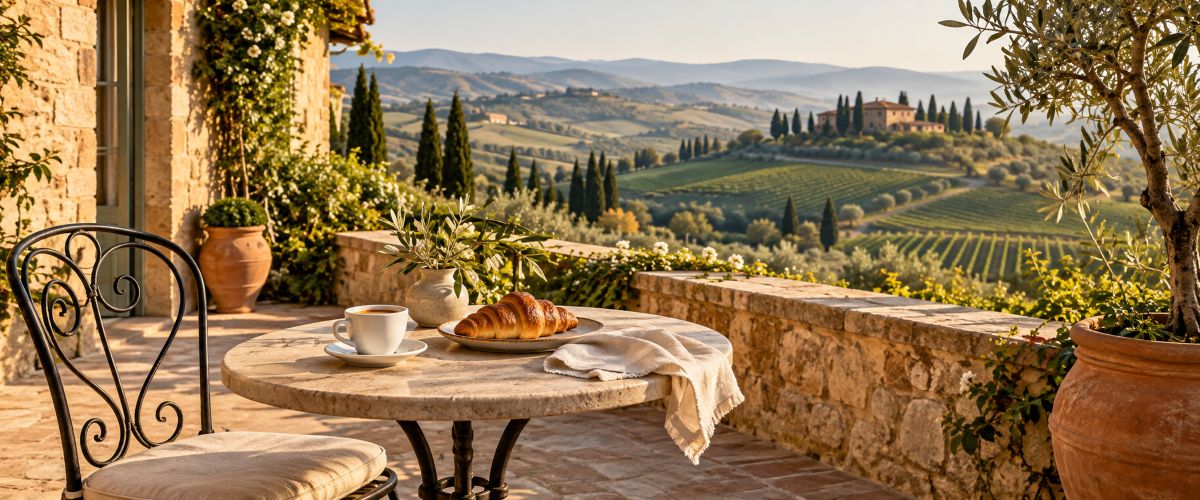
Italian Lifestyle
A menu in Milan offers a way to explore a local food tradition rather than simply choosing a familiar Italian dish. Three useful names to recognise are risotto alla milanese, cotoletta and ossobuco. You do not need to order all three in one meal. Understanding the basics helps you choose around your appetite and the restaurant’s actual preparation.
A market visit in Milan can mean browsing ingredients, looking for an old print or getting to know a neighbourhood. A covered food market, a street market and an antiques fair are different experiences. Choose the type that interests you before arranging the rest of the day around a name on a list.
A chocolate visit in Perugia can offer more than a stop for souvenirs. You might explore the culture of cacao, learn about a local producer or focus on tasting. Start by deciding what you want to discover and checking exactly where that experience takes place.
Perugia, the capital of Umbria, lends itself to a day built around walking, looking and taking a proper pause. You do not need to turn the historic centre into a sequence of hurried stops. Choose a few points of interest, leave room for a side street and let the day develop at a pace you enjoy.
Ravello offers a different perspective on the Amalfi Coast: looking out over the sea from a hillside town, then turning away from the panorama to explore a garden or a small street. Its appeal is not only the famous view. Architecture, planting and local craft can give a day here a satisfying focus without an ambitious list of stops. Build the visit around what you enjoy most. Two gardens, a long lunch and village time may fill the day perfectly well. If you prefer a shorter outing, choose one major visit and leave room to move at your own pace. Begin with the village rather than a race to the viewpoint Piazza Vescovado is a useful starting point in Ravello's historic centre. Villa Rufolo overlooks the square, and the cathedral provides another point of interest nearby. Pause to understand how your chosen visits fit together before setting off. Give the streets between attractions a place in the plan. A ceramic workshop or a shop displaying locally made objects may offer the kind of detail that a distant coastal photograph cannot capture. Ask where and how an item was made rather than assuming every souvenir is local. Use Villa Rufolo as a garden and architecture visit Villa Rufolo combines a historic residence with gardens arranged across different levels. The attraction is the relationship between the built spaces, planting and open views, so allow time to look in more than one direction. A visit can be more rewarding when you notice how a doorway or path frames the landscape. Check the villa's own notices before travelling. Events and temporary arrangements can change what is accessible. If a concert is central to your plans, confirm the performance details separately from an ordinary garden visit. Give Villa Cimbrone its own space in the day Villa Cimbrone is known for its gardens and the Terrace of Infinity. The terrace's marble busts form a memorable foreground to the coastal view. The property also operates as a hotel, so distinguish public garden access from access to hotel facilities. Do not reduce the visit to one photograph. Leave time for the garden paths and for the walk back. Before buying tickets, check current visitor arrangements and ask about the route if steps or uneven surfaces affect your plans. Choose a workable day structure One option is to visit Villa Rufolo, stop for lunch, then continue to Villa Cimbrone if the available time and walking suit you. Another is to choose one garden and use the remaining time for the village. Neither is a timed itinerary or a promise about how quickly you will move. Avoid attaching a beach outing, several coastal towns and two garden visits to the same short day. Ravello's elevated position is part of the experience; changing levels and moving between places deserve their own time allowance. Check the practical details before leaving your base Confirm the route to Ravello and a suitable way back. Check garden opening information and current notices. Allow for walking, steps and rests rather than counting only travel time. Choose footwear you already find comfortable. Leave flexibility for weather or a delayed journey. Consult the official Villa Rufolo website for its visitor notices and Italy's official tourism guide to Ravello for an overview of the town. Recheck operational details for your travel date instead of relying on an old screenshot. Ravello questions Do I need to stay at Villa Cimbrone to visit the gardens? The gardens have public visitor access; check the current arrangements separately from hotel reservations. Should I visit both gardens? Only if that suits your interests and available time. One considered visit is preferable to rushing through two. For broader planning, read our travel tips for Italy. Explore Italian lifestyle for more ways to connect places, craft and the rhythm of a visit.
Burano's colourful houses make an immediate impression, but the island becomes more interesting when the visit moves beyond the photograph. Its lace tradition offers another way to look closely: at materials, patterns and the time required to make a small object. A day here can connect visual pleasure with an appreciation of skilled work. Rather than treating Burano as a short pause in a long island circuit, give it one clear focus. A museum visit, a walk and an unhurried meal can create a more coherent outing than repeatedly checking the next boat departure. Let the houses set the scene Burano is part of the Venetian lagoon and is known for its brightly coloured houses. Enjoy the changing combinations as you walk, but remember that these streets are also residential spaces. A doorway that frames a beautiful picture is still someone's entrance. Keep paths clear, avoid leaning on private property and ask before photographing a person at close range. These small choices make it easier to enjoy the island without turning daily life into a backdrop that belongs to visitors. Give the Lace Museum a place in the visit The Lace Museum stands in Piazza Galuppi, in the historic building that housed the Burano Lace School between 1872 and 1970. Its collections provide context for Venetian and lagoon lace, allowing a visitor to see more than a decorative souvenir. The museum presents the craft through historic pieces, explanations and displays about techniques. Use the visit to notice differences in pattern and construction, rather than trying to memorise every period. Check current opening information and any programme you hope to see before setting out. Ask useful questions when shopping for craft A label saying lace does not explain how or where an item was made. If provenance matters to you, ask the seller whether the piece is handmade, what work was completed locally and which materials were used. A clear explanation is more useful than an assumption based on the shop's location. Compare objects you would actually use at home. Consider their care requirements and how you will transport them. Buying nothing is also a reasonable outcome when the information or design does not suit you. Build the day around the return journey Check your starting point in Venice, the service that reaches Burano and the route back. Use the current transport information rather than copying a line number or journey time from an old itinerary. The most convenient connection depends on where you begin and when you travel. Leave room for waiting, boarding and the walk from your accommodation to the departure point. A museum ticket and a transport ticket are different purchases unless the specific product states otherwise. Read what is included before choosing a pass. Do you need to add another island? Only if the extra journey supports the kind of day you want. It is easy to turn a lagoon outing into a sequence of arrivals and departures. If Burano's craft tradition is your main interest, use the available time there rather than adding another destination automatically. Write a simple priority order: the museum, walking time, a meal and the journey back. Check opening information first, then arrange the flexible parts around it. Avoid treating an early start as a promise of empty streets. Where to check the details Use the official Lace Museum website for visitor information and the ACTV navigation timetable for current services. The city's Burano guide provides an introduction to the island. Burano questions Is Burano only worthwhile for photographs? No. The lace collection and craft history provide a cultural focus beyond the house colours. Is every lace item sold on the island locally handmade? Do not assume that. Ask about the particular item and its production. For the wider journey, read our travel tips for Italy. Explore Italian lifestyle for more perspectives on everyday places and traditional craft.
A museum can give an Italian city its shape: a painting adds meaning to a church facade, a sculpture makes you notice the stonework outside, and a quiet gallery offers a different rhythm from a busy piazza. The most satisfying visit starts with a choice about what you want to see, rather than a list of famous rooms to finish. For travelers who enjoy Italian design and craftsmanship, that is a useful approach. Look closely at a few works and allow time to notice texture, proportion and detail. There is no prize for seeing everything. Choose the experience before the museum Start with your interests. Do you want Renaissance paintings, sculpture, archaeology or a broad introduction to art? Then consider the rest of your day. A major collection can become the main event, with lunch and a neighborhood walk around it. Two large museums on the same day may leave less attention for either. Three possible anchors are the Uffizi in Florence, the Vatican Museums and Galleria Borghese in Rome. Treat them as different choices, not a mandatory circuit. For a wider view of pacing a trip, see our Italy travel tips. Check what your ticket actually includes Begin with the museum's own website. The Uffizi booking information directs visitors to its official ticketing route. Check which venue or combination you are purchasing, the selected date and the admission instructions before paying. Galleria Borghese requires reservations for all ticket categories, including free admission. Do not assume an eligibility discount removes the booking requirement. At the Vatican Museums, review the current visitor information and official booking options for your chosen day. A timed entry is not a promise that every security or admission step disappears. Leave room in the schedule for the process described by the venue. Give the visit a simple shape Before arrival, choose three things you particularly want to see. Save the booking confirmation and check the correct entrance. Read the venue's current rules on bags, photography, clothing and accessibility; these differ, so a generic Italy packing list cannot replace them. Carry a manageable day bag and avoid bringing everything you packed for the trip. If you need a cloakroom, check its availability and restrictions first. A smaller bag may be more convenient, but it does not guarantee entry without a bag check. Leave space after the gallery Plan a flexible meal or walk rather than another tightly timed reservation immediately afterward. That leaves room for a slower visit and gives you a chance to connect the collection with the city outside. The same attention to small details runs through our guide to the Italian art of living beautifully. Questions before you book Should every museum be booked in advance? Check each venue. Some require reservations; others offer several admission routes. Popularity alone does not tell you the rules. Is the earliest slot always best? Choose a time you can reach comfortably. Opening time is not a guarantee of an empty museum. Can this guide replace current visitor information? No. Confirm opening days, ticket conditions and access arrangements directly before booking.
A train journey can be part of the pleasure of an Italian holiday: time to read, watch the landscape and arrive without spending the day behind a wheel. The stressful moments often happen around the journey, when a station name is unfamiliar, a ticket instruction is unclear or a bag is awkward to move. Plan those small transitions before departure. You do not need a minute-by-minute schedule, but you do need to know where you are going and which conditions apply to the ticket you bought. Start with the whole journey Look beyond the time printed beside the train. Include travel from your accommodation to the departure station and from the arrival station to your next stop. Check the exact station names on the booking; a city name alone may not identify the station you need. Before choosing a connection, think about your luggage and walking pace. A short transfer may look attractive on a screen but leave little flexibility. If an important booking follows the journey, allow a margin rather than planning around the earliest possible arrival. Our Italy travel tips can help you fit a rail day into the wider itinerary. Read the rules for your own ticket Do not rely on the blanket advice that every Italian train ticket needs the same validation process. Trenitalia states that its Digital Regional Ticket validates automatically at the scheduled departure of the selected train; a separate check-in is not required for that product. Other ticket formats and operators can have different conditions. Read the instructions attached to your purchase, including any validation, identity-document, train-specific or change requirements. Keep the ticket accessible and carry the identification required by the operator. If your plans change, check the applicable conditions before boarding a different departure. A ticket visible on your phone is not, by itself, proof that any train will accept it. Make the station easier to read Save the train number as well as the destination. Check the departure information at the station and follow updates for your service. A useful pair of words is partenze for departures and binario for platform. Keep your phone charged and make sure you can retrieve the ticket without searching through a crowded inbox. An offline copy can be useful where the ticket format permits it, but it does not replace any required activation or official ticket display. Pack for the moments between seats Choose luggage you can move comfortably through the station and onto the train. Keep your document, ticket and essential items in an accessible compartment, and close the bag before moving through a crowd. Once aboard, use the appropriate luggage spaces and keep doors and aisles clear. Follow the operator's luggage rules rather than assuming that a free space beside a seat is intended for a suitcase. A convenient day bag is one you can manage alongside your main luggage. Keep arrival flexible Check the onward route before the train reaches your stop. Leave time to get your bearings, especially if you are collecting luggage or continuing by local transport. Do all tickets need a machine stamp? No. Follow the instructions for your exact ticket type. Is a very tight connection worth it? Consider the consequences of missing it, not just the time saved. Where should I check changes? Use your operator's official information; for Trenitalia services, start with Trenitalia.